

Many people think only about reaching Everest Base Camp. They imagine the mountains, the glaciers, and the moment they finally arrive at one of the world’s most famous trekking destinations.
But there is another part of the experience that deserves attention—the journey back.
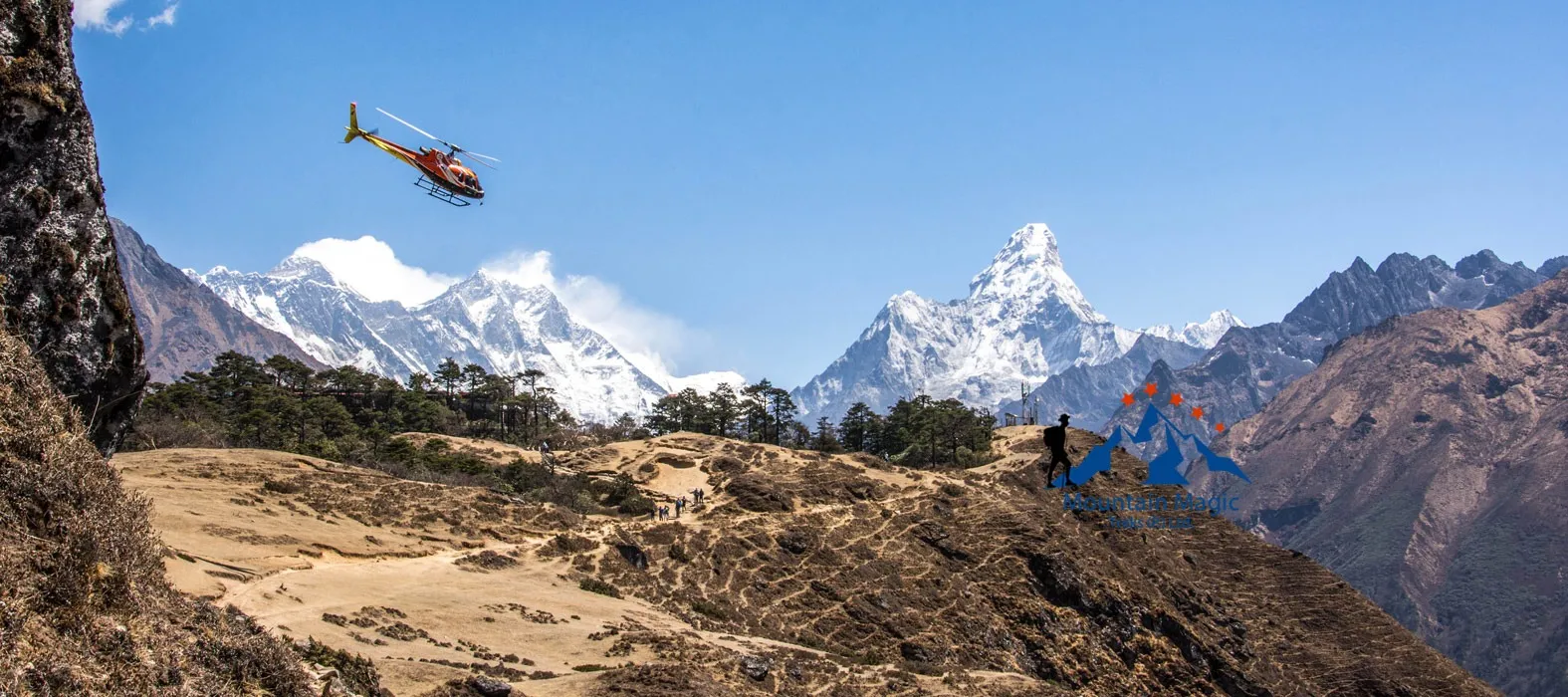
The Everest Base Camp Trek With Helicopter Return is different because it combines two ways of seeing the Himalayas. You walk through villages, forests, valleys, and high mountain trails, then return by helicopter and see the same region from the sky.
This creates a very different experience from a traditional round-trip trek.
Walking Helps You Understand the Mountains
The trekking part of the journey allows you to experience the Everest region slowly.
You begin in Lukla and move through villages such as Phakding, Namche Bazaar, Tengboche, Dingboche, Lobuche, and Gorakshep before reaching Everest Base Camp and Kala Patthar.
Each day adds something new.
The Landscape Changes Step by Step
The lower trail has forests, rivers, and suspension bridges.
Higher up, the trees become fewer, the air becomes colder, and glaciers begin to appear.
This gradual change helps trekkers understand the scale of the Himalayas.
If you arrived directly by helicopter, you would miss much of this experience.
That is one reason why the walking section remains so important.
The Villages Become Part of the Story
The Everest region is not only about mountains.
People live and work in these valleys, and the villages along the route bring life to the journey.
Every Village Has Its Own Character
Namche Bazaar is busy and lively.
Tengboche is known for its monastery and peaceful surroundings.
Dingboche sits in a wide valley surrounded by high peaks.
Lobuche feels remote and close to the glacier environment.
These places are not simply overnight stops.
They help travelers understand how communities have adapted to life in the mountains.
Acclimatization Makes the Trek Better
The itinerary includes acclimatization days in Namche Bazaar and Dingboche.
Some trekkers see these days as delays, but they are actually an important part of the experience.
Rest Helps You Move Higher
The body needs time to adjust to altitude.
Walking too quickly can make the trek harder.
Acclimatization days allow you to enjoy the journey with less stress and more energy.
They also provide extra time to explore local areas and enjoy mountain views.
Everest Base Camp Is Only One Part of the Journey
Reaching Everest Base Camp is a special moment.
The Khumbu Icefall, glaciers, and surrounding peaks create a dramatic setting.
But many trekkers discover that the memories they value most come from unexpected moments.
Small Experiences Stay Longer
A warm meal after a cold day.
A quiet morning in Dingboche.
Prayer flags moving in the wind.
The sound of the river below a suspension bridge.
These simple experiences can become as important as standing at Base Camp itself.
Kala Patthar Changes the Perspective
The itinerary also includes Kala Patthar, which reaches about 5,545 meters.
This viewpoint is famous because it offers wide views of Everest and nearby peaks.
Sunrise Feels Different at High Altitude
Watching the morning light touch the mountains can be unforgettable.
The changing colors and shadows create a scene that photographs cannot fully capture.
Sometimes the best choice is to stand quietly and enjoy the moment.
The Helicopter Creates a New Experience
After several days of trekking, the helicopter return changes everything.
The Everest Base Camp Trek With Helicopter Return allows travelers to see the region from above after exploring it on foot.
The Scale Suddenly Becomes Clear
While walking, valleys can feel huge.
From the air, those same valleys appear smaller.
Trails become thin lines.
Villages become tiny clusters of buildings.
Glaciers, rivers, and mountain ridges connect into one large landscape.
Seeing the region from above helps trekkers understand how far they have traveled.
The Return Saves Time
A traditional Everest trek includes several more days of walking back along the same route.
The helicopter removes this section.
More Experience, Less Repetition
This does not make the journey easy.
You still complete the challenging trekking route to Everest Base Camp and Kala Patthar.
The helicopter simply reduces the repeated return walk.
For travelers with limited time, this can be a practical choice.
Weather Still Plays an Important Role
The Himalayas follow their own rules.
Flights depend on weather, wind, and visibility.
Flexibility Is Part of Mountain Travel
It is wise to leave extra time in your overall travel schedule.
A flexible plan reduces stress if weather causes delays.
Experienced travelers understand that patience is part of visiting high mountain regions.
Prepare for Two Different Experiences
This journey combines trekking and flying.
That means preparation should include both.
Useful Items to Carry
A simple packing list may include:
-
Warm clothing
-
Sunglasses
-
Sunscreen
-
Water bottle
-
Gloves
-
Snacks
-
Camera
-
Personal medicine
Good preparation helps you enjoy the experience instead of worrying about small problems.
The Journey Looks Different From Above
One interesting thing happens during the helicopter return.
You begin to recognize places you walked through earlier.
You may see valleys, rivers, or villages that took hours to reach on foot.
Now they pass below in minutes.
It Brings the Entire Trip Together
Walking gives you details.
Flying gives you perspective.
The combination creates a fuller understanding of the Everest region.
That is what makes the Everest Base Camp Trek With Helicopter Return unique.
More Than a Trek
Many travelers begin this journey thinking only about Everest.
But they often return with memories of villages, local culture, mountain mornings, and quiet trails.
The mountains are important, but so are the people, the landscape, and the journey itself.
The Everest Base Camp Trek With Helicopter Return offers a chance to experience the Himalayas from two different viewpoints—on the ground and from the sky.
That combination creates memories that stay long after the trip is over.
FAQs
Is the helicopter return included after the trek?
Yes. The helicopter is used after completing the main trekking section.
Do I still walk to Everest Base Camp?
Yes. The route to Everest Base Camp and Kala Patthar is completed on foot.
What is the highest point?
Kala Patthar is the highest point, at approximately 5,545 meters.
Are acclimatization days included?
Yes. The itinerary includes acclimatization days in Namche Bazaar and Dingboche.
Can weather affect the helicopter?
Yes. Weather conditions in the mountains can affect helicopter operations.
